

Early Career and Precarious Researchers (ECPR) Speakers

ECPR Keynotes
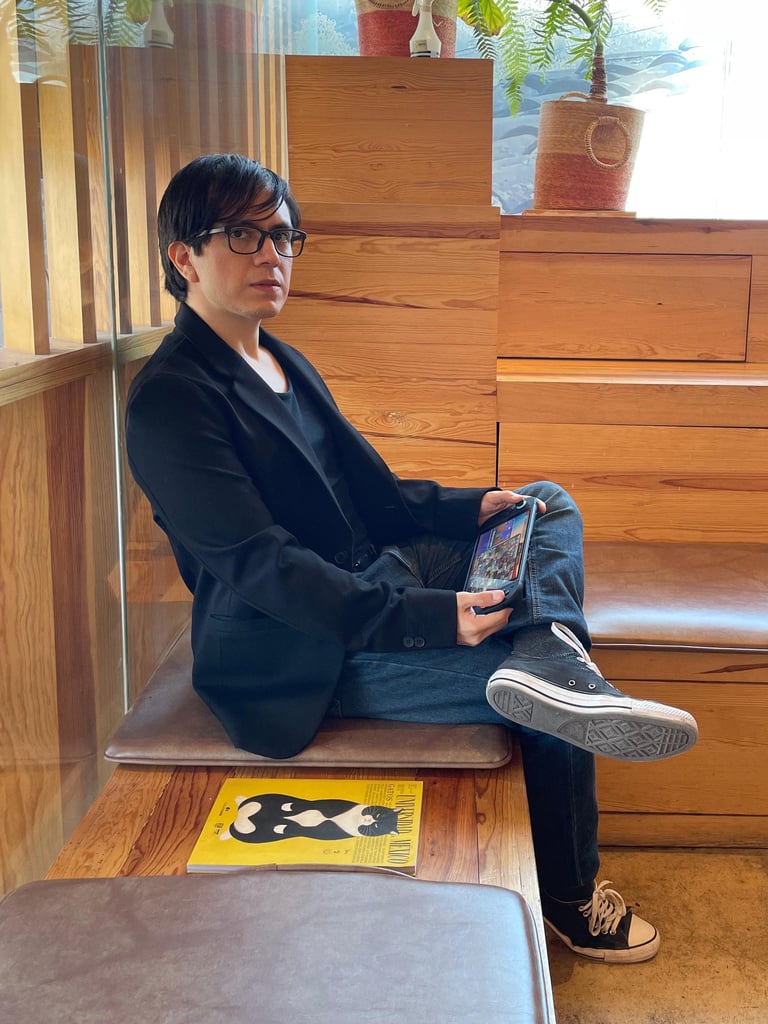
Daniel Salinas is a PhD candidate in Humanistic Studies at Tecnológico de Monterrey in Mexico. His research focuses on Mexican gay male video game players, or gaymers, with particular attention to questions of identity and masculinity within gaming culture. His current work explores how gaymers in Monterrey, an industrial and socially conservative city, develop and negotiate belonging within spaces and cultures typically associated with heterosexual male interests and norms.
Through ethnographic research with Gaymer Nights, a community that organizes in-person gaming events for LGBTQ+ people, he examines how video games function as a social and cultural anchor for collective identity. These events combine conventional gaming practices, such as casual play and tournaments, with more unconventional activities like non-competitive group dancing to Just Dance choreographies. Alongside karaoke, drag, and other forms of leisure, the community fosters a safe space for gaming where different expressions of gender, masculinity, and sexuality coexist.
A central finding of his research is that gaymer identity in this community is shaped not only through shared gaming interests, but also through humor, affect, and forms of intimacy that challenge more rigid or competitive models of masculinity. Participants engage with pop culture and mainstream game franchises, such as Pokémon, in ways that are playful and often interpreted through a queer lens. This suggests that queerness in gaming does not necessarily depend on explicit LGBTQ+ representation, but can emerge through reinterpretation and shared experience with familiar media.
Online interactions through social media further reinforce a shared understanding of video games as a space for gay and queer subjectivities, particularly through visual and verbal communication that blends irony and camp aesthetics with video game imagery and language. At the same time, community moderation and official communication enforce rules aimed at preventing harassment, especially by regulating explicit sexual exchanges. Despite Gaymer Nights’ efforts to welcome all queer gamers, participants are primarily gay men, raising questions about the scope and limits of inclusivity within queer gaming communities.
By focusing on a Mexican context, Daniel’s work contributes to expanding discussions in game studies beyond Global North perspectives, highlighting how local cultural conditions shape gaming practices and identities. More broadly, this research offers insight into how marginalized communities create spaces of belonging within and around digital media.
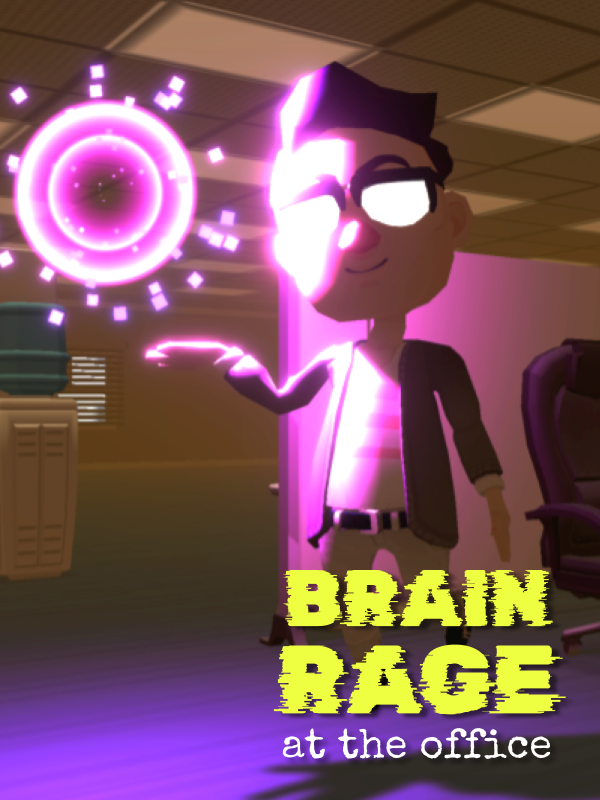
Neurogames are videogames that use neurotechnology as part of their game mechanics. This nascent field is usually relegated to university labs and gimmicky stands in science conferences. However, neurogames have the potential to stand on their own as videogames with extended user interfaces, not merely as a gamified use case. In order to prove this, neurogames and their supported neurotechnologies must become accessible to both the public and gamers alike. Diego Saldivar has been working for five years to lower barriers of entry into the field of neurogames, presenting his work in scientific conferences and vying to present it in gaming conferences as well. In this showcase, two neurogames will be demonstrated: “Brain Rage at the Office” (Android) and “Dragon Path - Awakened” (iOS).
“Brain Rage at the Office” was developed as a demo to show that neurogames have all that is needed to become economically viable as a ludic product: usage of cheap neurotechnology, support of a widely used gaming platform, plug-and-play user experience, cheap price and, most importantly, an engaging gameloop and a relatable narrative: the main character is an office worker (random race and gender) who has just been fired, now they can use their psychic powers to destroy the office. No need to meditate, you can use your rage to explode things too!
“Dragon Path - Awakened” was conceived as a demonstration of proper therapeutic gamification, where the neurogame’s multimedia feedback reinforces self regulation techniques by encouraging the player when they reach the desired state of mind and gives negative feedback otherwise. The idea is to create horizontally-transferrable autoregulation skills by immersing the player in a ludo-narrative that makes the most out of Asian philosophy and cultural elements. In this game, you’re an apprentice monk that must learn to use their psychic energy to master the five elements: earth, water, wood, fire and metal. Spoiler: you get to challenge a dragon in the end.


This presentation examines how Uyghur youth transformed the online multiplayer game PUBG (Players Unknown Battleground) into a fragile but vital communication infrastructure under conditions of extreme surveillance. In East Turkestan, ordinary digital communication through phone calls, text messages, and platforms such as WeChat has become deeply dangerous for Uyghur families, especially when contact crosses borders. Against this backdrop, PUBG emerged unexpectedly as a space where young people could communicate, care for one another, and maintain ties that state repression sought to sever.
Drawing on interviews with Uyghur youth in the diaspora, this presentation shows how players used PUBG’s voice chat, avatar movement, team mechanics, and nonverbal cues to ask about relatives, share emotional support, and sustain connection in ways that were less visible than conventional communication channels. These practices reveal how commercially designed games can be repurposed as improvised infrastructures of survival and resistance. What appears from the outside as ordinary play becomes, in this context, a deeply political act of staying connected.
The talk is part of Ifat Gazia’s broader dissertation project, A Taxonomy of Digital Erasure: People, Platforms, and Politics, which examines how marginalized communities experience and resist disappearance across digital platforms. While much of the scholarship on surveillance focuses on monitoring, censorship, and data extraction, this project asks what happens when people are pushed into alternative digital spaces simply to preserve social life. By bringing game studies into conversation with political communication, surveillance studies, anthropology, and decolonial media theory, the presentation expands how we understand both games and resistance.
Rather than treating games only as entertainment, this work asks how multiplayer environments can become infrastructures of care under authoritarian conditions. It highlights the creative strategies of communities living under intense digital control and foregrounds the ethical responsibilities of researching people whose communication practices carry real-world risks. The presentation also reflects on the methodological challenges of documenting covert, fragile, and often invisible forms of digital resistance.
Voices from the Game offers a grounded and human account of how people find ways to speak, listen, and remain present when their worlds are forcibly fractured. It invites game studies scholars to consider how play, communication, and survival intersect in contexts of repression, and how marginalized gamers repurpose platform architectures in ways never imagined by designers.

ECPR Shortlisted


This project explores how video game narratives shape player perceptions of gender roles, with a particular focus on how female characters are often positioned in secondary or sacrificial roles in relation to male protagonists. Drawing on feminist game studies, the Stereotype Content Model (SCM), and Ambivalent Sexism Theory (AST), the research examines how familiar tropes such as the Damsel in Distress and Women in Refrigerators continue to influence storytelling conventions in games.
The study combines theoretical analysis with an experimental gameplay approach. Participants were first asked to evaluate well-known video game characters in terms of competence, warmth, and narrative importance. They then played a short interactive game in which they constructed story scenarios by assigning male and female characters to “hero” or “damsel” roles. These scenarios were based on recognisable narrative tropes, including a captured, murdered, and cursed damsel, but were presented using gender-neutral language and visually generic characters to avoid influencing player decisions.
Importantly, participants were not made aware that their choices were being analysed in relation to gender. Instead, their decisions were recorded through a coded system, allowing for a comparison between their stated perceptions and their in-game choices. This approach enabled a more nuanced understanding of how players interpret and apply gender roles within familiar narrative structures.
The findings revealed a more balanced distribution of gendered roles than expected, suggesting that players are increasingly open to subverting traditional storytelling conventions. At the same time, male characters continued to receive grated recognition and visibility, highlighting the lasting influence of established industry patterns.
As a woman and early-career researcher in games, this work reflects a broader interest in how interactive media can both reinforce and challenge societal norms. By combining theory, design, and player interaction, the project aims to contribute to ongoing discussions around representation, agency, and equality in game studies, while exploring the potential for more inclusive and nuanced storytelling in the medium.


Daeana Paula Bourscheid, a PhD candidate at the Federal University of Santa Catarina, Brazil, is redefining how we intervene in the psychosocial landscape of game development. As a clinical and Industrial-Organizational (I-O) Psychologist, her work bridges the gap between Game Production Studies and psychological practice, specifically focusing on the pervasive phenomenon of "crunch".
From Diagnosis to Intervention
During her Master’s research (2023–2024), Daeana conducted a cross-sectional study of 351 Brazilian game workers. Her findings established a critical link between regular engagement in crunch—reported by 52% of the sample—and a high prevalence of Common Mental Disorders (CMDs). This research provided the industry with two essential tools: a new, evidence-based definition of crunch and a proposal for standardized measurement.
Building on this empirical foundation, her doctoral research shifts from diagnosis to active solution. Daeana is currently designing structured I-O interventions aimed at reducing work intensity and workload. Her objective is to move beyond documenting precarious labor toward deploying empirically tested strategies that foster sustainable, healthy working environments in game production.
Global South Perspective
Daeana’s trajectory is shaped by her position as a researcher in the Global South, where she navigates structural precarity and inconsistent research funding. Despite these systemic challenges, her status as a Take This Accelerate Fellow and her presence in this showcase represent a vital opportunity to validate Global South narratives. Her work is focused on establishing international networks and collaborations necessary for sustaining high-impact research and promoting global knowledge development in the industry


This project examines how adults with acquired brain injury (ABI) participate in digital gaming communities, and how these environments may support social connection, pleasurable engagement, and community belonging. While existing work on disability and gaming has often focused on accessibility, impairment, and exclusion, less attention has been given to how disabled players actively create and experience pleasure, identity, reciprocity, and mutual support within gaming spaces. This developing programme of research addresses this gap by bringing together perspectives from game studies, disability studies, and social capital theory.
Drawing on concepts of bonding, bridging, and linking social capital, the project explores how digital games may provide opportunities for adults with ABI to form close relationships, access broader networks, and participate in communities structured around shared goals and interests. For people who may experience fatigue, communication changes, mobility limitations, stigma, or reduced opportunities for offline social interaction, gaming can offer flexible and low-barrier forms of participation. These spaces may support not only entertainment, but also feelings of competence, agency, recognition, and belonging.
The project is also informed by an intersectional framework, recognising that disability is experienced alongside other dimensions of identity, including gender, age, class, and social background. From this perspective, pleasure is understood not simply as recreation, but as an affective and relational experience shaped by access, identity, community norms, and platform design. Digital gaming communities are therefore approached as socio-technical environments that can both enable and constrain social connection. Communication tools, moderation practices, game mechanics, and community cultures all influence how disabled players participate and the kinds of social and pleasurable experiences that become available.
The planned research programme will use mixed methods and involve people with lived experience of ABI throughout the research process, including design, interpretation, and knowledge translation. By centring disabled players’ perspectives, the project aims to generate insights relevant to inclusive game design, community governance, social prescribing, and digital participation after brain injury.
This work contributes to emerging conversations about intersectional pleasures, disabled play, and the relational possibilities of digital communities. It positions digital gaming as a meaningful site of social participation, identity negotiation, and community formation for adults with acquired brain injury.
C o n t a c t U s digraireland2026@gmail.com