



José P. Zagal
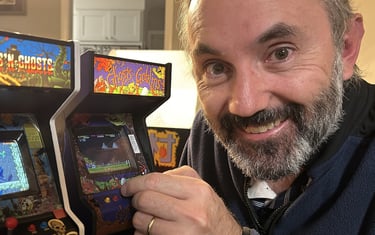
Dr. José P. Zagal is a Professor in the University of Utah’s nationally ranked Division of Games, where he teaches game design, ethics in videogames, and experimental games. Since teaching his first game course in 2000, he has supervised multiple award-winning student projects, and many of his former students now work at leading studios on acclaimed titles.
He has authored and edited numerous books and articles on topics including game ethics, game design, and role-playing games. His recent works include Seeing Red: Nintendo’s Virtual Boy (MIT Press, 2024), Fifty Years of Dungeons & Dragons (MIT Press, 2024), and The Routledge Handbook of Role-Playing Game Studies (Routledge, 2024).
Dr. Zagal has served as chair of the DiGRA (2014) and FDG (2015) conferences, and was a DiGRA board member from 2006–2015.
He was named a Distinguished Scholar by DiGRA and a Fellow of the Higher Education Video Game Alliance (HEVGA) for his contributions to games research.
He is currently Editor-in-Chief of Transactions of the Digital Games Research Association (ToDiGRA). He holds a Ph.D. in Computer Science from Georgia Tech (2008), and an M.Sc. and B.S. in Engineering from Pontificia Universidad Católica de Chile.
EL Putnam
Dr. EL Putnam is Associate Professor in Digital Media at Maynooth University in Ireland. They are an artist-philosopher whose interdisciplinary practice explores the pleasures and tensions of digital technologies through performance art, moving image, and multimedia installation. Their work investigates the entanglements of human embodiment with computational systems, asking how we might find new modes of connection, encounter, and possibility within and against digital infrastructures.
Their recent monographs include Livestreaming as Aesthetic and Ethical Encounter (University of Minnesota Press, 2024) and The Maternal, Digital Subjectivity, and the Aesthetics of Interruption (Bloomsbury, 2022).
Recent exhibitions include Under the Feet of Shadows with author Mike McCormack shown at Mart Gallery, Dublin (2024) and CIACLA, Los Angeles (2025) and the solo exhibition PseudoRandom at Emerson Contemporary, Boston (2023).
They are a member of Mobius Artists Group (Boston), Bbeyond (Belfast), and AICA Ireland. Dr. Putnam holds a PhD in Aesthetics, Art Theory, and Philosophy from the Institute for Doctoral Studies in the Visual Arts.



Sarah Schoemann
Sarah Schoemann (they/she). A fine artist turned researcher in Human Computer Interaction and Game Studies, Dr. Schoemann runs the Critical Art and Technology, or "CAT" Lab, which uses emergent forms of art, design and digital media to critically engage with broader social questions regarding justice, equity and inclusion with a particular emphasis on feminist and queer tech. Projects include MYdata, an app that lets users visualize data from their everyday lives, Courting Contraceptives, a dating sim that helps people who menstruate choose contraceptives and Dolly's World, a queer VR game exploring wage theft.


Mateusz Felczak
Mateusz Felczak is an assistant professor at the Institute of Humanities at SWPS University in Warsaw, Poland. He holds a PhD in Arts Studies from the Jagiellonian University. His research interests include computer role-playing games, system design, modding, and electronic sports. His previous research project, funded by the Polish National Science Centre, focused on large-scale eSports events in Poland and Hong Kong. He has published articles in Convergence, Game Studies, and the Journal of Gaming & Virtual Worlds, among others. Mateusz also works at Sundog as a game data analyst, supporting the development of the digital game Ibru.


Simon Hewitt
Simon is an Assistant Professor at Maynooth University whose research explores the relationship between media audiences and media industries, with a particular focus on how this gap is negotiated and bridged. His work draws on theories of cultural capital to examine changing audience participation in the digital era. His recent projects include research on word-of-mouth in contemporary Hollywood, intermedial labour practices in UK scare attractions, video game and cinematic convergence in the late 1990s, the Samhain industry in Ireland, and the financial dynamics of paratextual film audience communities.


Natalia Corbello Pereira
Natalia Corbello is a PhD student in Communication at Universidade Federal Fluminense and in Literature at Universidade Estadual de Maringá, Brazil. She holds a master’s degree in Language Arts, having defended her thesis on the topic of "The composition and reception of time in the art of videogames". Her current research examines the historical transformations of videogame poetics and aesthetics, the theoretical dialogue between videogames and other art forms, and the political uses of the art of videogames.


Emmanoel Ferreira
Emmanoel Ferreira is an Associate Professor in Media and Cultural Studies at Universidade Federal Fluminense (Brazil), specialising in digital games, media cultures, and decolonial approaches to game studies. His work explores the historical and cultural dimensions of play, with a focus on video game histories in Brazil. He is currently a Visiting Professor at the Instituto Politécnico de Bragança (Portugal). Ferreira is President of DiGRA Brasil and an active contributor to international game studies, including conference organisation and the History of Games International Conference. He has edited volumes such as Estéticas do Lúdico (2024) and supports ongoing global dialogue on the study of digital games.


Carlos Kelly
Dr. Carlos Gabriel Kelly González (known to students as Profe) is an Assistant Professor of English at Kennesaw State University and the 2024 International Latino Book Award winner for Ready Player Juan: Latinx Masculinities and Stereotypes in Video Games. He earned his PhD from Ohio State University and completed a postdoctoral fellowship at Rice University.
His research is a key contribution to US Latinx video game studies, exploring storytelling through Latine perspectives shaped by his experience growing up between Tijuana and San Diego. He is currently co-editing Coded Latinx, a collection on Latinx gaming and game studies, and is also a published performance poet.
Leon Xiao
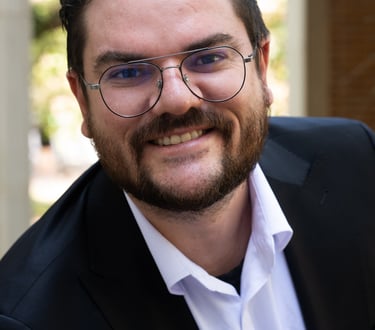
Dr. Leon Y. Xiao (leonxiao.com) is a Presidential Assistant Professor at the School of Creative Media, City University of Hong Kong. He leads the Creative Media Policy Observatory (cmpo.net). He has been Called to the Bar of England and Wales. He researches video game and gambling policy and regulation with a particular focus on empirical evaluations of compliance and implementation. Recent studies focused on using laws to access research data to identify breaches of consumer law and advertising regulations. His research is often relied upon by policymakers and regulators globally. He gave evidence at Stormont to the Northern Ireland All Party Group on Reducing Harm Related to Gambling and was consulted by the All Island Institute of Public Health, which asked him to review the loot box aspect of a draft report on the advertising of harmful products to children. Leading media, including RTÉ, regularly feature his findings and commentary.


Lindsay Grace
Dr Lindsay Grace is Knight Chair in Interactive Media at the University of Miami and Vice President of the Higher Education Video Game Alliance. His work focuses on social impact and design in games, and he is the author of Doing Things with Games, editor of Love and Electronic Affection, and author of the bestselling Black Game Studies.
A recipient of the Games for Change Vanguard Award, he has published over 100 scholarly works, exhibited internationally, and curated major programmes including the Smithsonian American Art Museum’s SAAM Arcade and the Games for Change Festival. He is a frequent speaker at venues such as GDC and SXSW and a former board member of DiGRA.


Lusha Huang
Dr. Lusha Huang is an Associate Professor at the Guangzhou Academy of Fine Arts and Director of the Information and Interaction Design Teaching and Research Center. Her research focuses on gamification, interaction design, and accessible experience design, particularly using serious games to support underserved groups.
She holds a PhD from The Hong Kong Polytechnic University and an MFA from the School of Visual Arts (New York). She has published widely, authored key monographs, led major research grants, and received international awards including the Red Dot and iF Concept Awards.


Melissa Rogerson
Dr Melissa Rogerson is a Senior Lecturer in Human-Computer Interaction at the University of Melbourne. Her research sits at the intersection of Game Studies, Board Game Studies, and HCI, with a current focus on hybrid games that combine physical and digital elements, supported by an Australian Research Council DECRA Award.
She holds a PhD in HCI and has published widely in leading venues. A long-time contributor to the games community, she has served as co-chair of Boardgames Australia, was the first woman on the International Gamers’ Awards jury, and is a member of the Game-in-Lab Scientific Committee.



C o n t a c t U s digraireland2026@gmail.com